Every cycle in India's stock market throws up winners that seem obvious only in hindsight —
stocks that were sitting in plain sight while most investors focused elsewhere. The defence
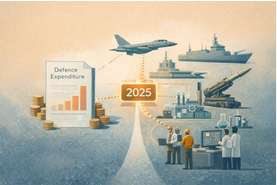
sector's re-rating over the past few years is one such story, with HAL share price movement
capturing the full force of that structural revaluation. Simultaneously, tracking the Reliance
share price reveals a business that defies easy categorisation, one that has consistently
surprised sceptics with its ability to pivot, scale, and create value in ways few anticipated. As
India's economic ambitions accelerate through the decade ahead, both companies appear
positioned to benefit from forces that are deeply structural rather than cyclical.
1. Reading HAL's Revenue Model with Greater Precision
Many retail buyers make the mistake of valuing HAL based solely on ownership income and
revenue figures without accounting for the specifics of defence contract financials. A large
proportion of HAL’s contracts have milestone-based sales popularity — meaning that money
is invested when a platform is entered or grown, may meet li to investors who expect a linear
earnings trend.
Don't panic to realise this now when 1/4 falls below the consensus estimate, especially when
leave-outs are pushed through delivery time instead of calling for demolition. What matters
more is cumulative order book costs, the pace of new deal signing, and any adjustments to
previous price assumptions that will affect working capital. Investors who understand HAL’s
revenue model at this level of granularity are much less reactive long-term to rapid period
price swings and are focused on the multi-year thesis underlying the funding.
2. Jio's Monetisation Journey and What It Means for
Reliance's Future
Jio's story comes in a new and possibly surcharge-hike move. The early years were mostly
about customer acquisition — building a virtually every payment base to maintain network
dominance. The focal point has often been a shift to community penalty development and
the introduction of a clear step to initiate monetisation. The current and near-future segment
is poised to deepen average consumer code revenue through cost-driven offerings: high-
speed plans, bundled content subscriptions, financial offering integration, and business
services.
Each of these incremental ARPU upgrades flows almost entirely to the bottom line once it
blankets the stable price base, which is why analysts are publishing GEO earnings with
enormously higher margin estimates to begin with, advising the headline ARPU numbers.
Running leverage is huge in a business that serves tens of millions of customers, and even
modest improvements in monetisation step-by-step for consumers lead to very large
absolute profit growth. This is the crux of Reliance’s bull case — and it reflects nothing but
full consensus in valuations.
3. Macroeconomic Sensitivity and Portfolio Context
An underappreciated part of the combination of HAL and Reliance is the unique ways they
respond to macroeconomic conditions. HAL is incredibly insensitive to the fluctuations in the
interest rate cycle, buyer confidence, or GDP growth, as most industry groups are. The
driving force behind these sales is defence spending by officers, which has shown resilience
even during years of broader economic pressures. This leads to herbal stabilisation in
fairness portfolios, which is heavily hyped in consumer discretionary or money sector names.
Reliability, with the help of valuations, is additionally affected by macro factors — especially
through its O2C trading enterprise, where sophistication margins are influenced by
international oil tariff dynamics. But diversification within Reliance itself provides certain
internal offsets. As macro conditions weaken, customers may also move down the order,
which will actually benefit from the positive segments in Reliance Retail’s pricing format. The
factor is that the disclosures strictly allow for macro-sensitivity portfolio generation of each
business firm, so that investors can lengthen the position primarily based on their views of
the economic environment, as opposed to treating all stocks as equally affected by the same
conditions.
4. ESG Considerations for the Thinking Investor
Environmental and social governance elements have moved from the edge of financing
analysis to its mainstream, and HAL and Reliance need to be evaluated through this lens.
The governance scale for HAL — given its reputation in the public sector — draws research
around transparency, board independence, and capital allocation efficiency as indicators that
increase public efficiency and security throughout the country.
Reliance made dramatic claims about its ESG studies, particularly its circular internet zero
commitments and green energy financing scheme. Investors and analysts are watching to
see if those commitments translate into measurable movements — installations
commissioned, emissions reduced, renewable energy delivered — in alignment with ultimate
ambition goals. Companies that credibly deliver on ESG commitments tend to attract a much
broader investor base over the years, which includes financial plans with ESG mandates that
currently cannot sustain them. For Reliance, it wants to grow its institutional shareholder
base in a way according to its transition to energy sources.
5. Conclusion: The Patience Premium in Quality Investing
Both HAL and Reliance reward traders who integrate precise judgment into the business
fundamentals and give them the stamina to play out the fundamentals over the years.
Neither company is proof against volatility, short-term earnings breakouts, or periodic market
rants about their lofty valuations, but the accumulated evidence over years of monitoring
each trade suggests a regular pattern: they are comprehensively outperformed by most
opportunity strategies.
The story of India — of a large, younger and aspiring population building infrastructure,
establishing and earning in a 21st century economy — is the most powerful tailwind behind
every company HAL Benefits because that story demands protection and sovereignty.
Shelter blessings as the story unfolds in services, trade unions and trade. Staying invested
in both, reviewing the essay periodically but not compulsively, and letting the diagrams of
composition do, remains the most time-tested method available to the Indian justice investor.