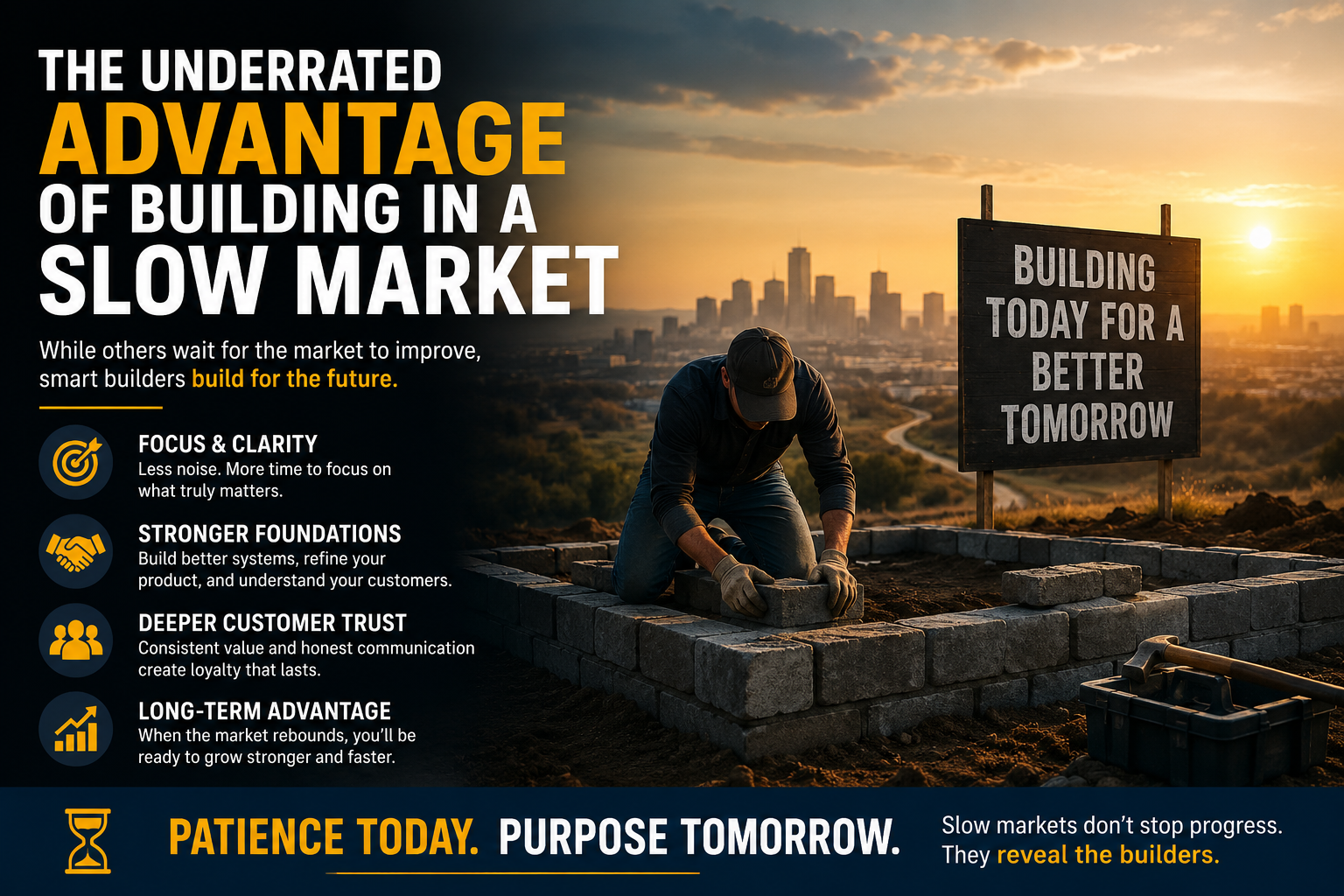
In today’s startup culture, speed is glorified. Founders are told to “move fast,” launch quickly, scale aggressively, and chase rapid growth at all costs. Social media constantly highlights overnight successes, million-dollar funding rounds, and viral products that seem to appear out of nowhere.
But what happens when the market slows down?
What happens when customers hesitate, investments tighten, and growth feels painfully slow?
For many entrepreneurs, creators, and businesses, a slow market feels discouraging. Yet history repeatedly shows that some of the strongest companies are built during uncertain or slower economic periods. Instead of seeing slow markets as obstacles, smart builders recognize them as opportunities to create stronger foundations, deeper trust, and more sustainable growth.
The truth is simple: slow markets reward patience, clarity, and resilience.
Why Slow Markets Feel Difficult
Human psychology naturally dislikes waiting. Whether it is waiting for results, customers, opportunities, or recognition, delays often create frustration and self-doubt. Research on waiting experiences shows that uncertainty and lack of visible progress can make time feel even longer psychologically.
In business, this emotional pressure becomes even stronger. When growth slows, many founders start questioning their ideas. Some abandon long-term strategies just to chase short-term wins. Others compare themselves to companies that grew during easier market conditions.
But slow periods are not always signs of failure. Often, they are moments where businesses are tested and refined.
Slow Markets Filter Out Noise
One underrated advantage of a slow market is that it removes distractions.
During boom periods, almost anyone can attract temporary attention. Marketing budgets are larger, investors are more aggressive, and trends spread quickly. However, not every business built in a fast market survives once conditions become difficult.
A slower market creates a natural filter. Weak business models struggle to survive, while companies with real value become easier to notice.
Customers also become more intentional with their choices. They spend carefully, research more deeply, and prioritize trust over hype. This gives thoughtful businesses an opportunity to stand out.
Instead of competing against endless noise, companies in slow markets can focus on building genuine relationships and delivering real solutions.
Patience Becomes a Competitive Advantage
One of the biggest advantages in a slow market is patience.
Most people underestimate how powerful consistency becomes when others quit too early. Human beings often expect quick rewards, especially in the digital age where instant feedback is everywhere. Yet meaningful growth rarely happens overnight.
Building during a slow market teaches entrepreneurs how to think long term. It encourages better decision-making because every move matters more. Teams become more disciplined, operations become leaner, and products improve through careful iteration instead of rushed expansion.
Patience is not passive. It is active endurance.
The businesses that survive slower periods often emerge stronger because they learned how to operate without relying on constant momentum or external validation.
Stronger Customer Trust Is Built Slowly
Trust is one of the most valuable assets any brand can develop.
In fast-growing markets, companies sometimes prioritize scale over relationships. Customer support weakens, product quality drops, and loyalty becomes transactional.
A slower environment changes this dynamic.
When customers are more cautious, businesses must communicate clearly, provide genuine value, and consistently deliver on promises. Research on waiting experiences in healthcare and service systems highlights that communication and transparency significantly improve how people experience delays and uncertainty.
The same principle applies to business.
Customers are often willing to wait when they trust the process and believe the outcome is worthwhile. Companies that communicate honestly during slower periods can create stronger emotional connections with their audience.
These relationships become incredibly valuable once the market improves.
Slow Growth Creates Better Foundations
Rapid growth sounds exciting, but it often hides structural weaknesses.
Some businesses scale before understanding their audience. Others expand without stable systems or sustainable cash flow. When conditions change, these weaknesses become dangerous.
Slow markets force businesses to strengthen their foundations early.
This includes:
- Improving operational efficiency
- Understanding customer behavior deeply
- Building sustainable financial habits
- Refining products based on real feedback
- Creating resilient teams and processes
Instead of growing recklessly, businesses learn how to grow intentionally.
Many successful companies that survived economic downturns later credited those difficult periods for teaching them discipline and adaptability.
Creativity Thrives Under Constraints
Limited resources can actually increase innovation.
When money is easy to access, businesses may rely too heavily on advertising, shortcuts, or excessive spending. In slower markets, creativity becomes essential.
Teams are forced to think differently. They focus on smarter marketing, stronger storytelling, better customer experiences, and more efficient systems.
Some of the most innovative ideas emerge during difficult times because constraints push people to solve problems more creatively.
A slow market can therefore become an environment where innovation is not optional — it becomes necessary.
Human Waiting Teaches Emotional Resilience
Waiting is uncomfortable because it challenges certainty.
Whether someone is waiting for success, recognition, or financial stability, uncertainty creates emotional pressure. Studies on human waiting experiences consistently show that unclear timelines increase stress and anxiety.
However, waiting also develops resilience.
Entrepreneurs who continue building during slow periods often become mentally stronger. They learn how to separate temporary conditions from long-term vision. They become less reactive and more focused.
This emotional resilience becomes a major advantage later because business cycles always change. Markets rise and fall. Trends come and go.
People who can remain steady during uncertainty are often the ones who succeed over time.
The Market Eventually Rewards Builders
Every market cycle changes eventually.
Economic slowdowns end. Consumer confidence returns. New opportunities emerge. When momentum comes back, businesses that spent time improving their systems, strengthening trust, and refining their products are positioned to grow faster and more sustainably.
The builders who stayed consistent during difficult periods often have less competition because many others gave up too early.
That is why slow markets can quietly create future leaders.
Final Thoughts
The world often celebrates speed, but sustainable success is rarely built instantly.
Slow markets may feel frustrating, uncertain, and emotionally exhausting. Yet they also provide rare opportunities to build stronger foundations, deeper customer trust, better systems, and long-term resilience.
Patience, consistency, and adaptability become powerful competitive advantages when the environment slows down.
In many ways, a slow market is not a setback. It is a training ground.
And for those willing to keep building while others stop, the rewards can be far greater than they initially imagined.